Shed Geek partnersSolar ventilation
Solar Blaster
Solar-powered roof vents and tubular skylights that keep sheds, attics and shipping containers cooler, drier and brighter, with no wiring and no power bill.
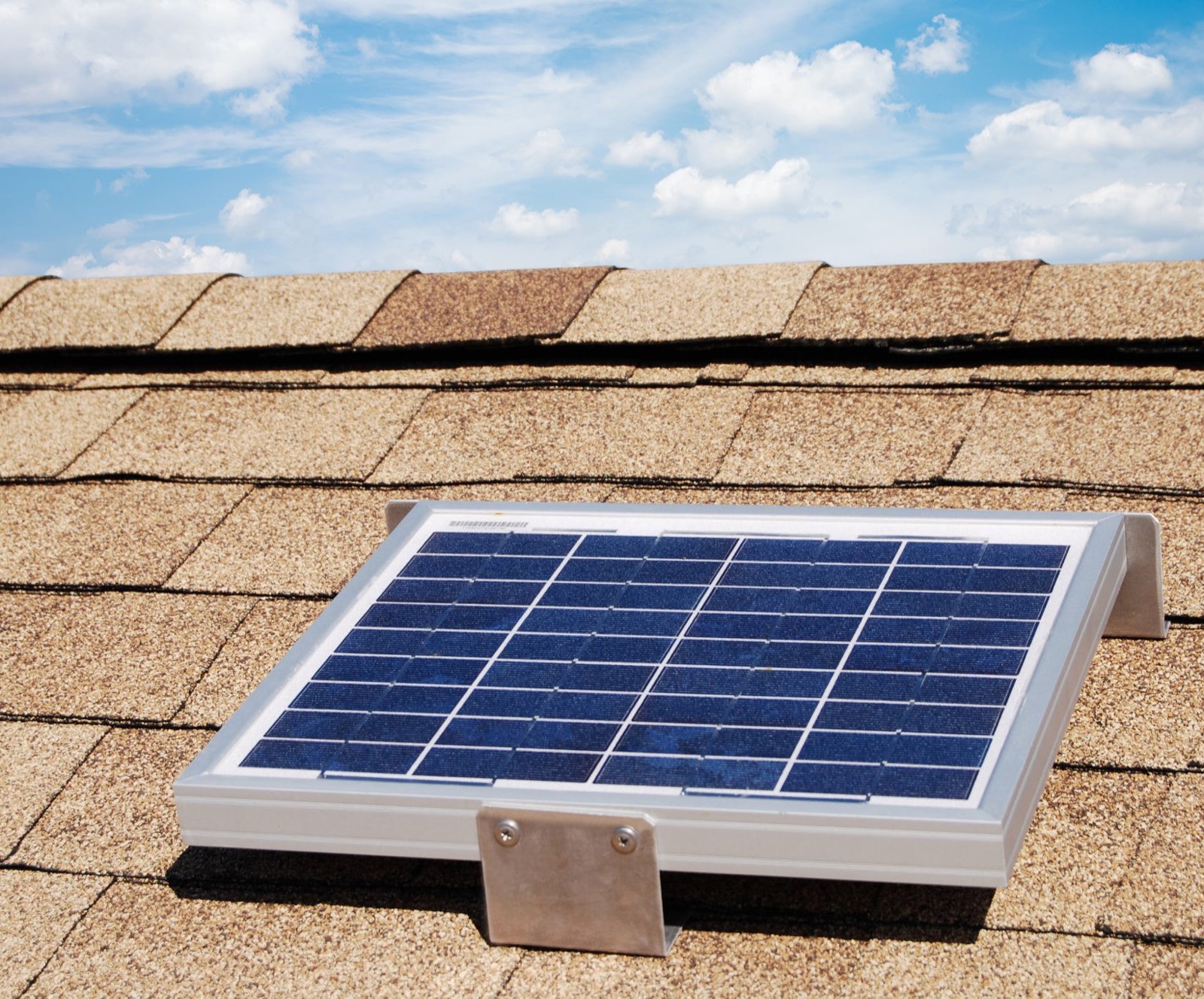

- Founded by
- Dan Rheaume, a roofer since 1986
- Based in
- Fountain Hills, Arizona
- Warranty
- Five years, transferable
The problem
Hot, moist air has to get out
If a building has inadequate attic ventilation, Solar Blaster's solar-powered fans for roof vents and attics are built to fix it. Hot and moist attics lead to all kinds of trouble, and Solar Blaster's aim is to prolong the life of the roof and make the space under it more comfortable.
Solar Blaster makes many different roof ventilation products to fit different situations, from different roof types to different structures, including sheds, garages and shipping containers.
Why solar
Don't wait for the wind
Wind turbine ventilators are not the most effective way to vent an attic or a shed. It is far better to boost the effectiveness of hot air rising and help it get out fast, and not just when the wind is blowing.
A solar fan in the exhaust vent works hardest when the sun is strongest, which is exactly when the heat builds up.
Our products
Solar Blaster products for sheds and containers
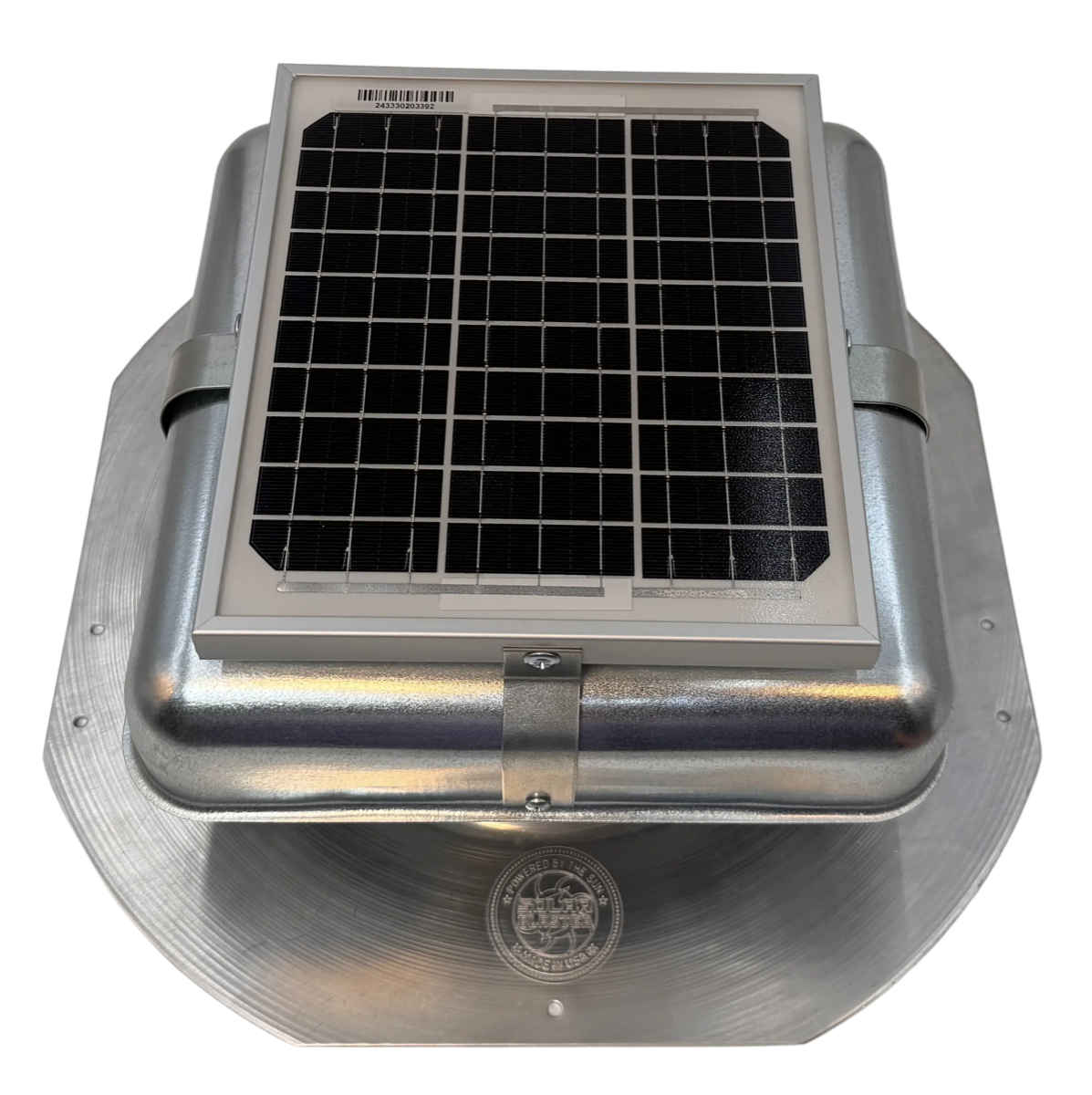
The Solar RoofBlaster
A solar-powered fan vent that ventilates an attic, shed or garage. It removes hot, moist air faster than a passive vent alone and installs just like any other roof vent. It can even go on a dog house to prevent heat buildup on hot summer days.
The Solar LightBlaster
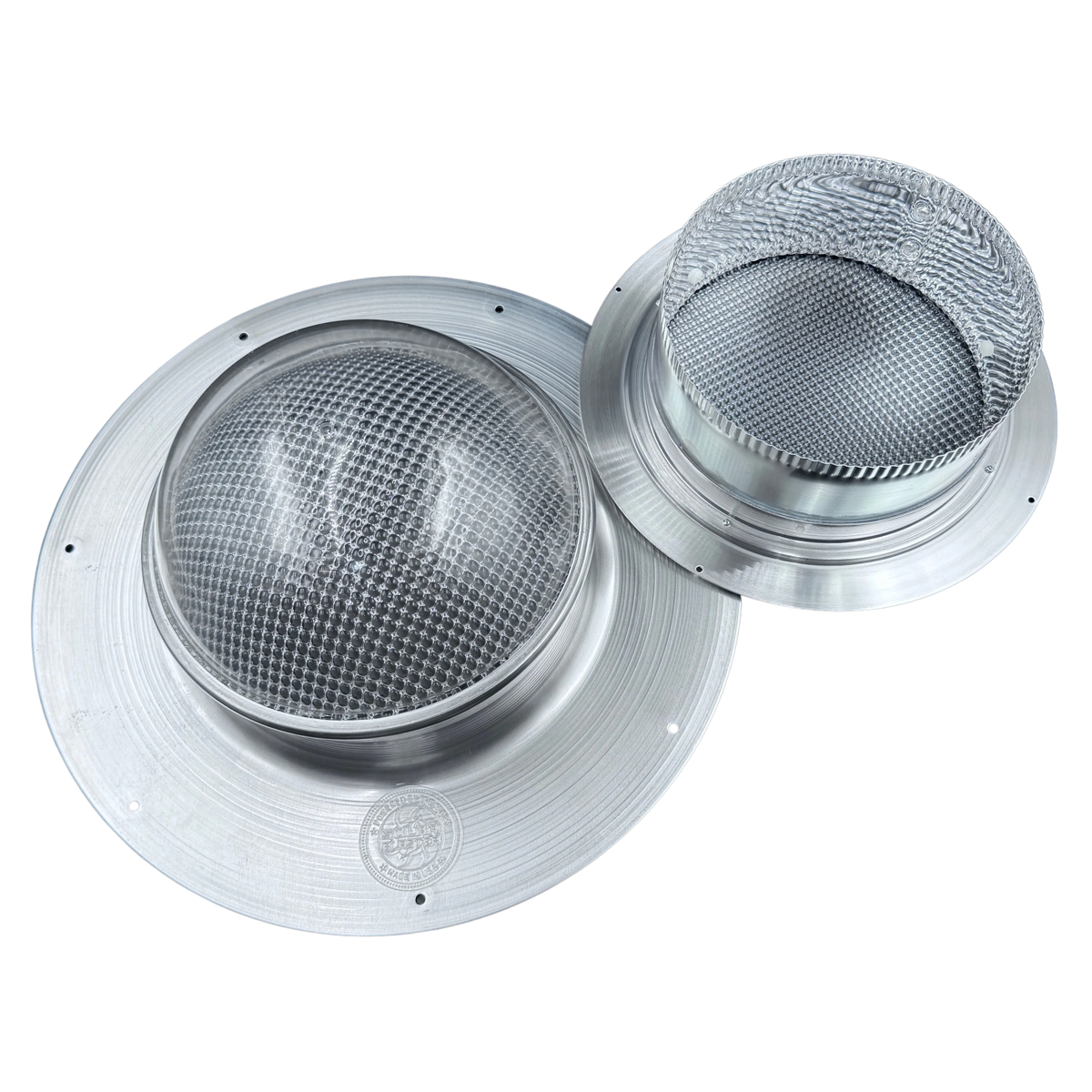
A solar tubular skylight made specifically for sheds. It is energy efficient, low profile and sturdy, installs easily, and saves money by eliminating daytime use of electric lights.
LightBlaster for Metal
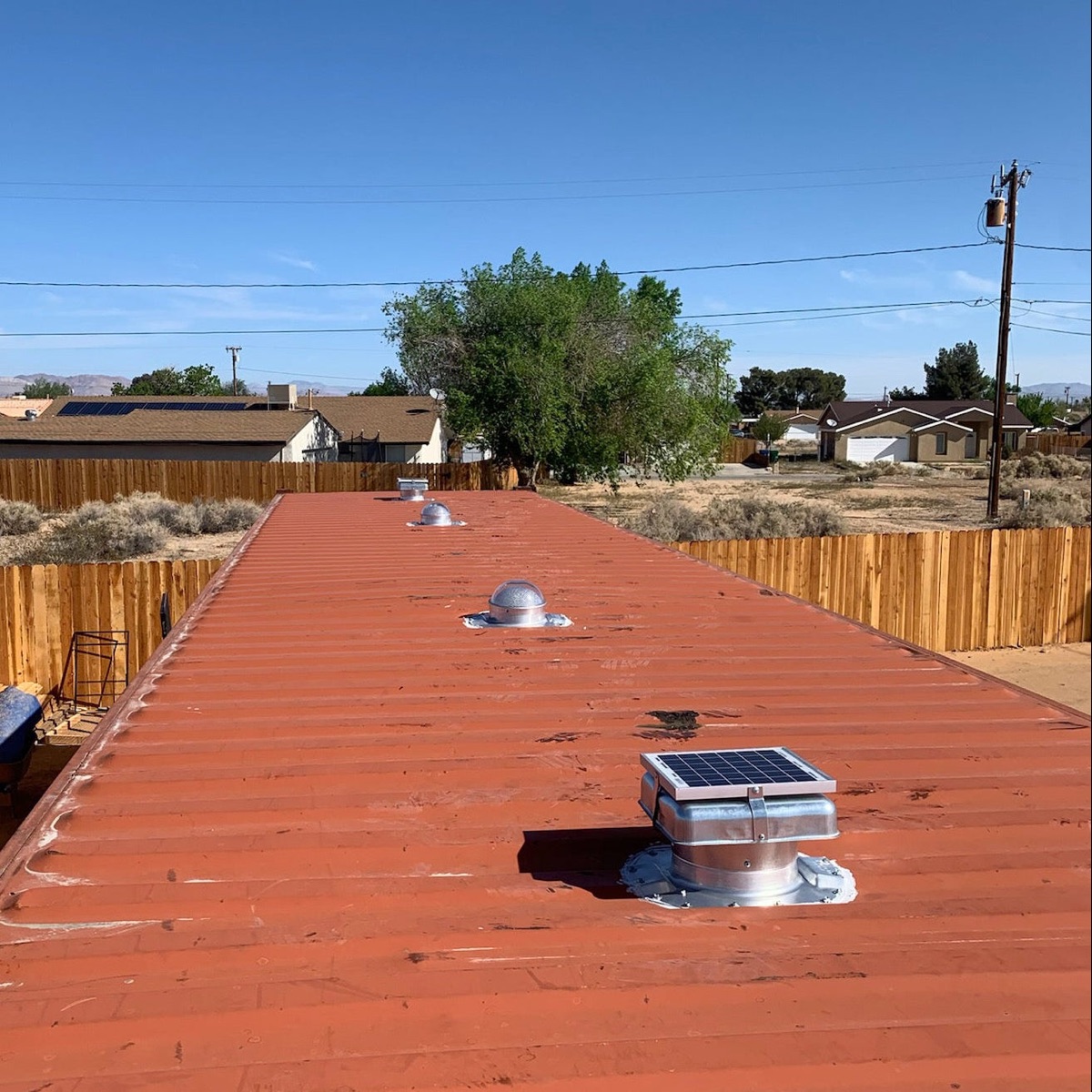
A solar tubular skylight made specifically for shipping containers, with the same low profile and sturdy construction as the shed model.
The Ridge Blaster
A solar-powered fan vent for attics, sheds and garages with ridge vents. Ridge vents exhaust air at the highest point, and the fans move hot, moist air out faster than a passive ridge vent alone.
Metal Ridge Blaster
The ridge vent fan for metal roofs. It floats on top of the metal sheeting and is secured under the ridge vent cover.
Why it matters
What a solar vent does for a shed
- Removes hot, moist air faster than a passive vent alone
- Promotes uniform air movement through the building
- Helps minimize mold and mildew growth
- Helps prevent the moist wood that leads to rot and pests
- Makes a shed or garage a cooler place to work
- Keeps stored tools from rusting
Solar Blaster in use
Shed Geek Podcast
Watch and listen
Dan Rheaume on the Shed Geek Podcast, plus Solar Blaster's own product videos. Press play to watch here, or listen to the podcast episodes on Buzzsprout.
 Play video: Cool Air, Safer Storage, Smarter Sheds
 Play video: Unlocking the Potential of Solar-Powered Sheds
 Play video: Light Blaster for Sheds
 Play video: Conex MEGA RoofBlaster - Adjustable
 Play video: Solar Blaster: Solar Roofing fans for venting attics and anything else
Dan's first Shed Geek Podcast episode, Dan Rheaume - Solar Blaster Fans (Season 1, Episode 45), is on Buzzsprout. More interviews with the people behind the shed industry are on the Shed Geek Podcast page.
Partner profile · Solar ventilation and skylights
Solar Blaster solar-powered vents and tubular skylights for sheds
Solar Blaster makes solar-powered roof vents and tubular skylights for houses, sheds, shipping containers and warehouses. Each vent carries its own small solar panel and fan, so it moves air without being wired into the building's electrical system. The company says its products are designed and assembled in the USA, in Fountain Hills, Arizona, and its Solar Blaster website sells separate product lines for each type of structure because, in the company's words, houses, sheds and shipping containers "all require their own unique ventilation and lighting solutions."
A roofer's idea
Solar Blaster was started by Dan Rheaume. On the Shed Geek Podcast, Dan explained that he started in the roofing business in 1986 and roofed in Seattle, Washington for 30 years. One day he looked down at a vent he was installing. It was supposed to solve moisture and heat problems in the attic, but in some conditions the air simply wasn't moving through it. He thought he could put a fan in it.
That became the first product: a standard roof vent with a small motor inside and a solar panel on top, powering itself. Dan said the company began with roofing applications and then gravitated to sheds, in part because the vent is "sized very nicely for a shed." Today the products go out to shed manufacturers across the country, and the line has grown to cover metal roofs, ridge vents, shipping containers and warehouses.
Why a shed needs to breathe
Solar Blaster's shed page puts the problem in numbers: on a 90°F day, the air inside a shed can reach 140 to 150°F. Heat is only half of it. Moisture comes up from the ground and in from the air, and when temperatures swing it condenses on cool surfaces. Dan calls this vapor drive. In the container world it is called container rain. The results are the kind of damage a customer blames on the building: warped or rotting wood, mold and mildew, rusted tools, and bags of concrete that harden in the corner.
The fix Dan describes is simple physics. Hot air rises, so you want cool air coming in through intake vents low on the building and hot air leaving through an exhaust vent at the highest point. That is a convective vent. Gable vents, in his view, are wind-driven vents: they move air across the top of the shed when the wind blows and do little when it doesn't. A solar fan in the exhaust vent speeds up the natural rise of hot air during the hottest, sunniest hours, which is exactly when the heat is doing the most damage.
What the numbers look like
Solar Blaster's FAQ gives the airflow math for a 10 by 10 by 10 foot space. With proper intake venting, the 35.2 CFM Solar RoofBlaster replaces the air every 28.4 minutes, and the 96 CFM Solar Mega RoofBlaster does it every 10.4 minutes. The fans slow down on cloudy days, when there is less heat to move anyway. At night the vents work as passive vents, still letting rising hot air escape as cooler air comes in through the intakes.
The product line for sheds
- Solar RoofBlaster and Mega RoofBlaster. Solar-powered exhaust vents for shingled shed roofs, including an adjustable Mega model.
- Solar RidgeBlaster and Metal RidgeBlaster. Fan platforms for ridge-vented roofs. The metal version's solar panel floats on top of the metal sheeting and is secured under the ridge cap, so the roof panels are not punctured.
- Solar LightBlaster. A tubular skylight made for sheds, in versions for shingled, metal and flat roofs. A dome on the roof sends daylight down a polished tube. The company says a 10-inch unit lights a space up to 150 square feet.
- Intake vents and accessories. Intake vents, a passive VentBlaster, SealBlaster sealant and the hole saw used for installation.
For shipping containers there are Conex versions of the RoofBlaster, SideBlaster and LightBlaster, sized for container roofs and walls.
How it is built
Solar Blaster lists the details that matter to a builder. The solar panels are 25-year rated. The fans are rated for 50,000 hours, which the company says works out to about 15 years at nine hours a day. The vents are all metal rather than plastic, most are modular so parts can be replaced from the top of the unit, and every unit comes with predrilled holes and an installation hardware kit. Products carry a five-year transferable warranty. On the podcast, Dan added that the company has had no warranty calls for hail damage to its panels.
On the Shed Geek Podcast
Dan has been on the show three times. His first appearance, Dan Rheaume - Solar Blaster Fans, came in the podcast's first season. In Unlocking the Potential of Solar-Powered Sheds (December 2024), he covers vapor drive, the LightBlaster and ridge products, and why ventilation helps a builder win the sale. In Cool Air, Safer Storage, Smarter Sheds (January 2026), he is joined by Jamie Krolczyk of Your Shed Guy in Pahrump, Nevada, a Solar Blaster customer who sells sheds and shipping containers in the desert, where dust wrecks turbine bearings and gable vents pull silt across whatever is stored inside.
Ventilation is one of the upgrades that separates one building from the next. For the floor under it, LuxGuard makes rubber shed flooring. To see how finished buildings are put together, browse the buildings Shed Geek sells or stop by the Ocean Springs lot on the Gulf Coast, where heat and humidity are a fact of life.
Product, specification and warranty details come from solarblasterfans.com (checked September 2026). Dan Rheaume's background and quotes come from the Shed Geek Podcast show notes and transcripts for Season 4, Episode 106 and Season 6, Episode 6. Confirm current products and specs directly with Solar Blaster.
Contact this partner
Talk to Solar Blaster through Shed Geek
Have a question for Solar Blaster or want an introduction? Complete the form and we will be in touch soon.
Prefer to go direct? Visit the Solar Blaster website.
