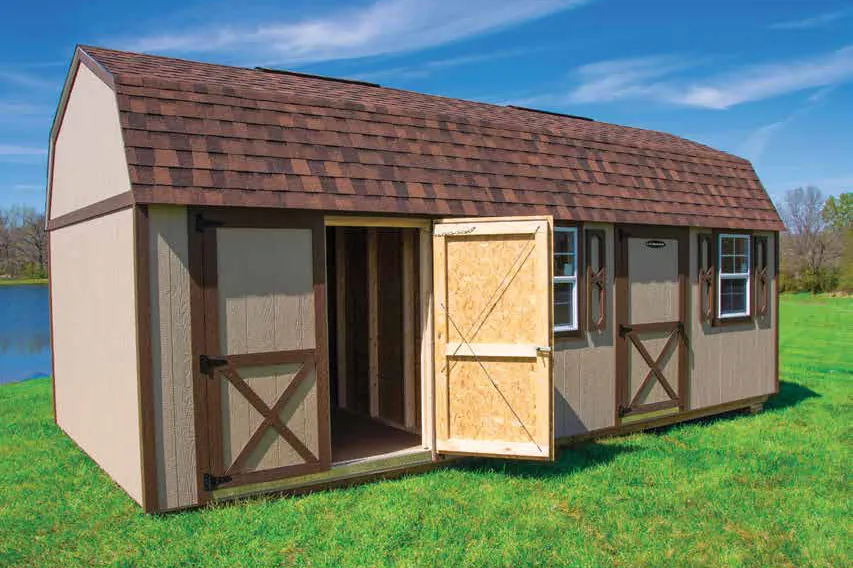
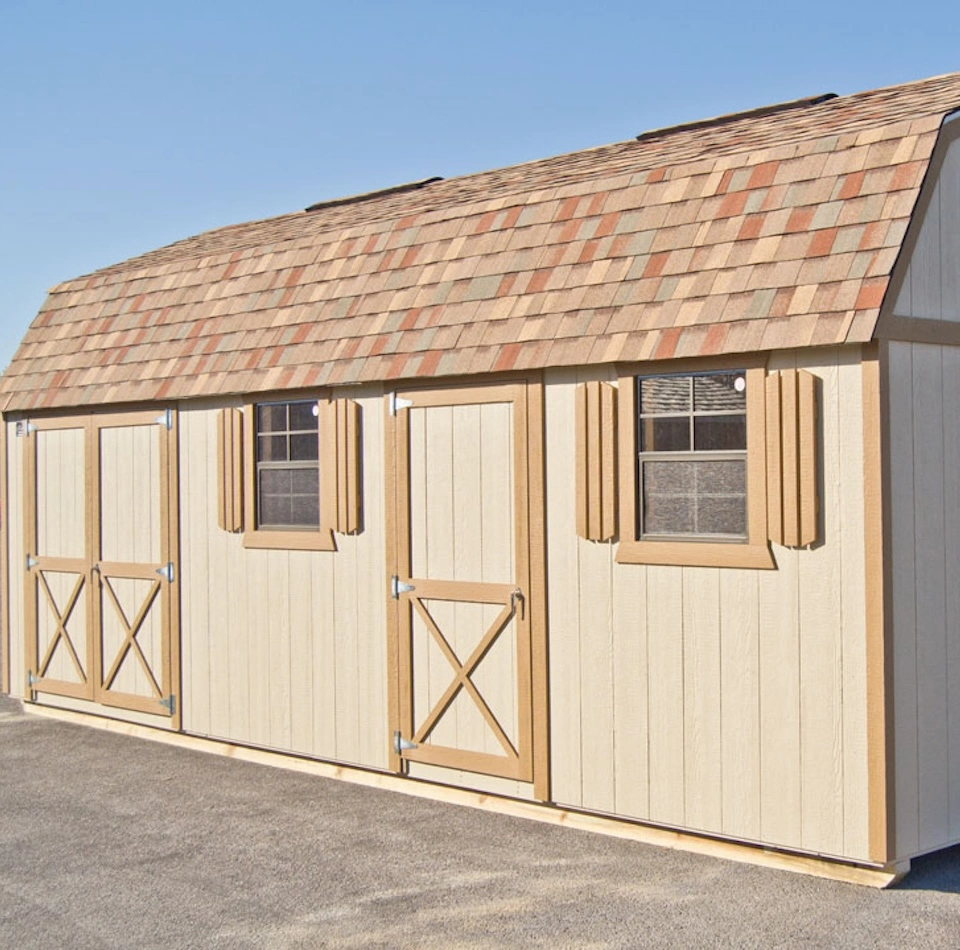
The floor. Every
building in the Shed Geek Structures
lineup rides on treated 4x6 notched
skids with the joists recessed into
the skid, decked in
three-quarter-inch tongue-and-groove
engineered flooring. The notch is
what lets a building get moved later
without racking the floor, and
ground-contact treated lumber runs
through the whole system.
The skin and the
roof. The siding is
engineered lap with a shiplap edge,
treated against fungal decay and
termites and carrying a 50-year
limited warranty. Roofs get an
aluminum drip edge on the eaves and
a vented ridge, so heat and
condensation leave at the peak
instead of soaking into the decking.
Ring-shank coated nails hold the
sidewalls as the wood swells and
shrinks through a wet season and a
dry one.
Wind. Hurricane
season runs June 1 through November
30. The Florida Building Code sets
the design wind speed for a
structure by address, and Pasco
County publishes its own wind speed
lines, so anchoring is never an
afterthought here. The county's
residential shed checklist asks for
engineered drawings signed and
sealed by a Florida-licensed
architect or engineer, or a
Miami-Dade product approval, before
it issues a permit. Ask for the
anchor kit and its rating before the
truck comes.
Termites.
Subterranean termites live in every
part of Florida, and UF/IFAS
confirmed Asian subterranean
termites established in South Tampa
in 2023. Treated skids and floor
framing are the first defense.
Keeping the building off bare dirt,
keeping mulch off the siding and
putting the yard on a termite plan
is the rest of it.
The ground. The
county averages 59 feet of
elevation, and Zephyrhills sits on
the higher, sandier side at about 95
feet. Sandy ground drains fast and
shifts if a building is dropped on
it unlevel. Delivery includes
leveling the unit on blocks so the
doors still swing true after the
first wet season.