1. Structures
  2. Spartanburg, SC
  3. Storage Sheds
Spartanburg display · Storage sheds

Storage Sheds in Spartanburg, SC

Most storage sheds in Spartanburg County get bought for the same reason. The garage lost.

New construction out toward Boiling Springs, Duncan and Lyman comes with a two car garage, and that garage holds two cars for about six months. Then it holds one car, a mower, four bikes, a deep freezer, and a stack of totes nobody has opened since the move. The second vehicle moves to the driveway and stays there.
★ Delivered across Spartanburg County
Start here

Start with the shed size, not the style.

Shed Geek Structures in Spartanburg sells storage buildings from the display at 840 Hospitality Dr, sized and specced for Upstate properties and delivered across Spartanburg County.

Style is the fun part and it is the part people lead with. Size is the part they regret. The rule that holds up: figure out what you need, then go one size up. Almost nobody comes back and says the building is too big.

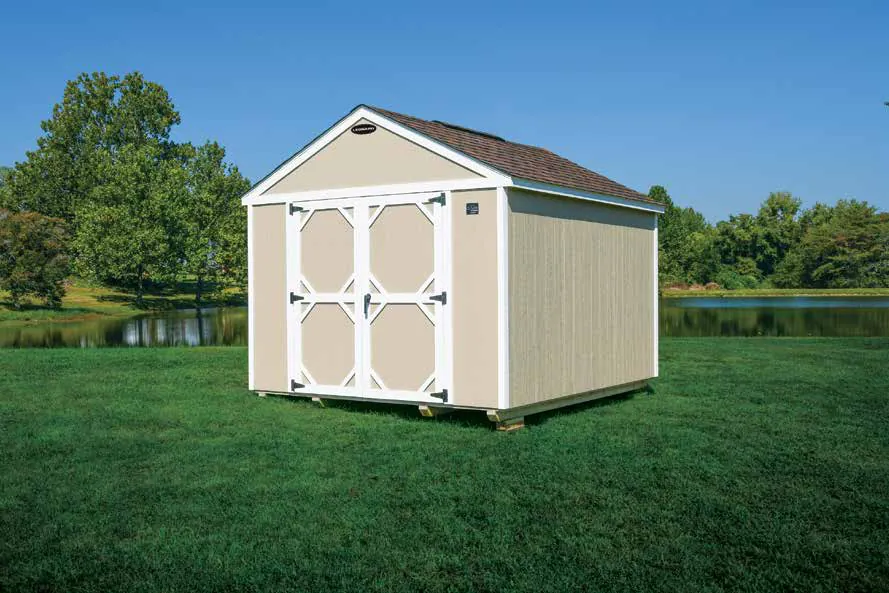
Tan gable-roof storage shed with white trim and X-brace double doors set on a lawn
A 10x16 is the size that moves most in Upstate subdivisions. Big enough to solve the problem, small enough to sit in a back corner of the yard.
Common sizes and what each one actually holds
8x10 to 8x12Tool shed Mower, trimmer, blower, hand tools, fuel cans. This is a tool shed and it fills up faster than you expect. It also stays under the 200 square foot permit threshold, which is the main reason people pick it.
10x16Subdivision standard The size that moves most in Upstate subdivisions. Fits the mower with room to walk past it, plus shelving down one wall. Big enough to solve the problem, small enough to sit in the back corner of a quarter acre lot without swallowing the yard.
12x20 and 12x24Usable space Where storage turns into usable space. You can put a bench along one wall and still park equipment. This is the most common size for anybody who wants to work in the building, not just stack in it.
12x32 to 14x40Acreage sizes Out past Woodruff, Cowpens, Pacolet and the east side of the county, where people have land and they use it. Usually running double duty, storage on one end and shop on the other.

Measure your riding mower with the deck on and the bagger attached. That measurement, plus turning room, sets your minimum width. People forget the bagger.

Five styles

Shed styles, and what each one is actually for.

Nearly everything on the display is built before it lands on the gravel. Walk it, pick the unit standing in front of you, and set a delivery date.

01 Utility shed, gable roof

The straightforward one. Standard peaked roof, good headroom in the center, and the lowest cost per square foot. If it is going to hold equipment and nothing else, this is the honest answer.

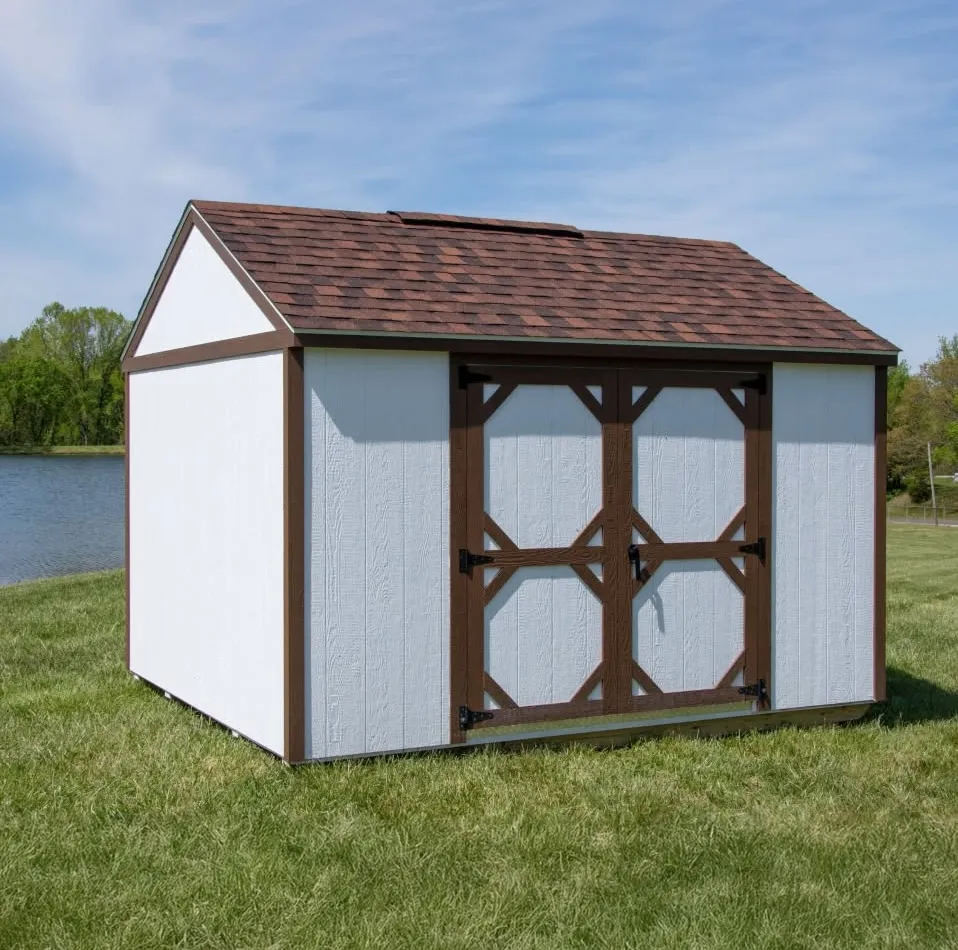
White utility shed with a straight gable roof, brown shingles and X-brace double doors
Gable roof, one peak, every dollar in structure.
02 Lofted barn, gambrel roof

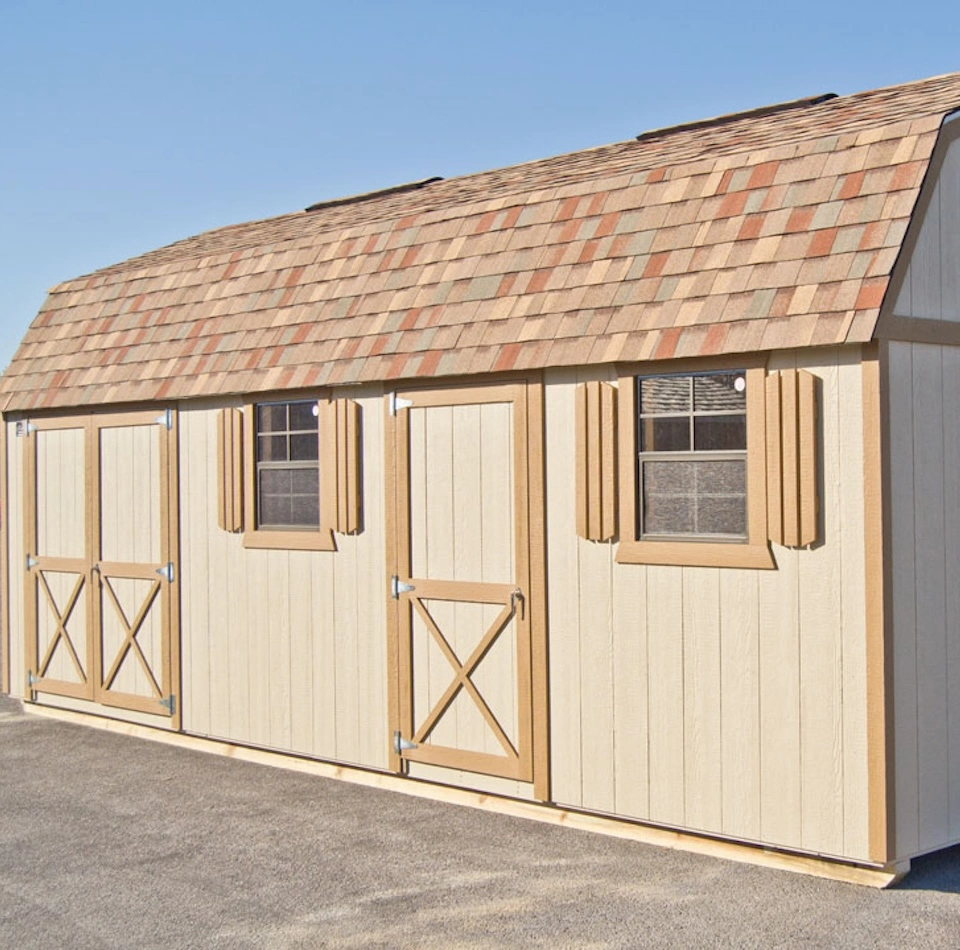
That barn profile with the steep lower slope and the shallow top. The geometry buys usable headroom out at the walls where a gable roof pinches in, and it gives you built-in loft space overhead. Same footprint on the ground, more storage in the building. If you are storing seasonal items you touch twice a year, the loft is where they go.

Cream lofted barn with tan trim, a gambrel shingle roof, side door and windows
Two slopes per side. The loft is the reason to buy it.
03 Side lofted barn

Loft along one side rather than the ends. Different traffic pattern inside, and worth looking at if you want a clear working wall.

04 Cabin style with a porch

Bought for offices, hobby rooms, guest space, and the thing people call a she shed or a man cave depending on who is talking. Also gets bought as backyard rental space, which is a separate conversation involving your zoning district.

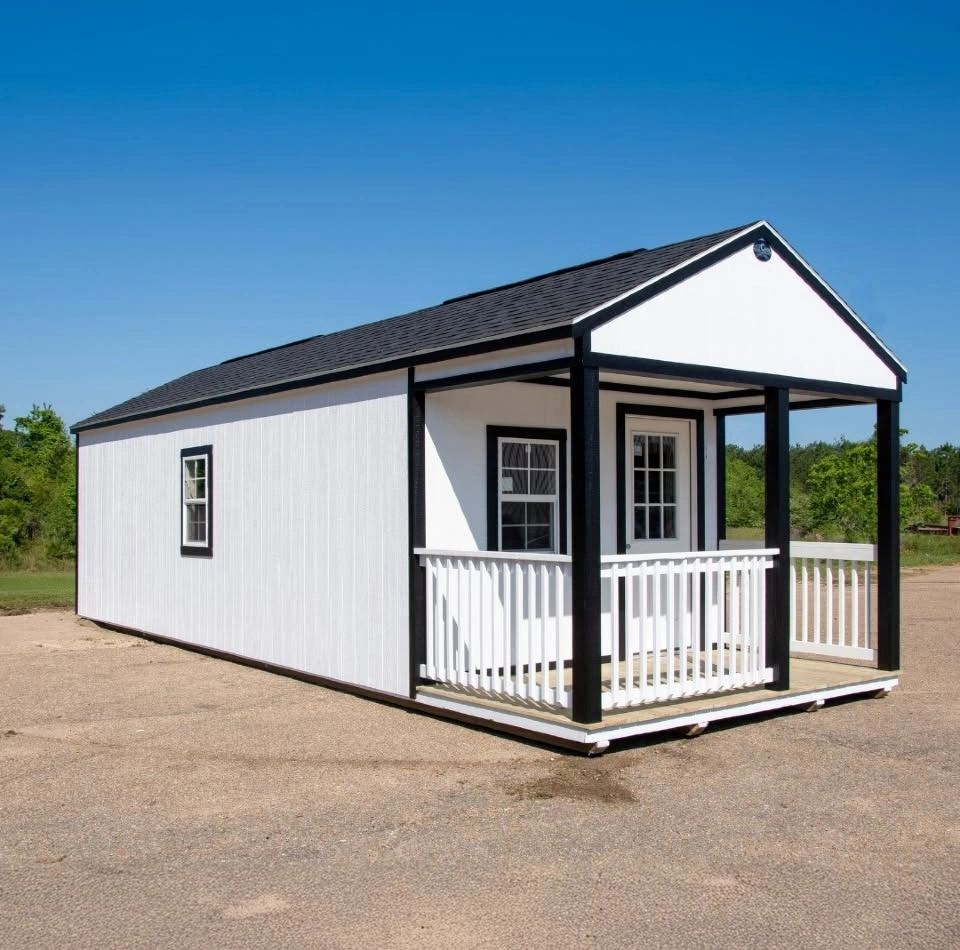
White cabin-style building with black trim and a covered front porch with railings
Porch out front, finished space behind it.
05 Workshop configuration

Any of the above with the upgrades that make it a shop instead of a storage box. Windows for daylight, heavier floor system, ramp, extra vents, and electrical rough-in.

Tan garage-style building with a white roll-up door and a ramp, set on a lawn
Roll-up door, ramp and daylight. A storage box you can work in.
Site prep

Red clay, and why the pad decides everything.

Spartanburg County is Piedmont red clay. It holds water, it swells and shrinks with the season, and it does not stay level under weight on its own.

A shed set on unprepared clay does not fall over. What it does is slowly go out of square. Doors start sticking in August. The floor develops a soft spot. Two years in, the building nobody thought about is annoying every time you open it.

Level ground and drainage that moves water away from the building solve it. Depending on your slope that means blocking, a gravel pad, or grading before delivery. It is not expensive and it is dramatically cheaper before the building arrives than after.

The slope thing is real in this county. A lot of Upstate lots have more grade than the owner registers until somebody puts a level on it. Walk the spot before you order.

Tan shed with red-trimmed windows and X-brace doors at the edge of a treeline
Cheaper before the building arrives than after.
Upstate weather

Humidity, pollen, and what to spec for it.

The Upstate runs humid from May through September, and spring pollen coats everything for about six weeks. Two things follow from that.

01

Vent it

Ventilation is not optional in a building you plan to spend time in or store anything that cares about moisture. Gable vents, ridge vents, or a window that opens.

A sealed box in an Upstate August is a sauna, and condensation is what rusts tools.

02

Ask what the siding is rated for

Siding choice matters more here than it would somewhere dry. Ask what the finish is rated for and what the maintenance schedule looks like.

A building that needs repainting every three years is a different purchase than one that does not.

03

Winter is the easy season

We get ice more than snow, and neither one is a structural concern for a properly built shed.

Nobody in Spartanburg County is buying to a snow load rating.

Before it lands

Permits and setbacks.

Three sets of rules can touch a backyard building here: the county or the city, your zoning district, and your HOA. Clear all of them before delivery day.

Do you need a permit?

Under the South Carolina Residential Code, a one-story detached accessory structure of 200 square feet or less is exempt from a building permit.

Practical translation: an 8x24 or smaller stays under. A 10x16 is 160 square feet and stays under. A 12x20 is 240 and does not. Neither does anything larger.

Source: SC Residential Code, R105.2. Verify against the current adopted edition for your address.

Setbacks are address specific

Setbacks vary by zoning district. Distance from your property line, your house, and any easement all get set by your district, not by a countywide number.

Get your parcel checked before you pick the spot, and we will place the building to match.

Spartanburg County Planning & Development: (864) 596-3570.

City limits and HOAs

Inside Spartanburg city limits, or in Greer, Duncan, Lyman, Inman or Woodruff, the municipal rules apply instead of the county's.

If you are in an HOA neighborhood, that is a third set of rules on top, and HOAs in the newer Boiling Springs and Duncan subdivisions tend to have opinions about siding color and placement.

Inside city limits, contact City of Spartanburg Building Inspections.

Call first. Spartanburg County Planning and Development at (864) 596-3570, or your city planning office. Bring the numbers to us and we will size to fit them. This section is a starting point. The only answer that counts for your address is the one you get from them.

Around here

What goes in them around here.

01

Lawn and property equipment

Riding mower, push mower, trimmer, blower, spreader, and fuel. A ramp package is the difference between rolling equipment in and wrestling it in.

02

Household overflow

Holiday bins, camping gear, the furniture nobody will admit they are keeping, and the kids' outgrown everything.

03

Workshop and hobby space

Woodworking, small engine repair, reloading, welding. Add power and vents and it becomes the place you actually want to be.

04

ATVs, side by sides, and hunting gear

Common on the east side of the county and anywhere with acreage. Feed, stands, and the equipment that has no business in the house.

05

Business and trade storage

Contractors keeping tools and material on their own property instead of renting a bay that closes at six.

06

Pool and lake gear

Anything with a Lake Bowen or Lake Blalock habit accumulates equipment that has to live somewhere.

Payment options

Paying for it.

Bring a monthly number to the conversation rather than asking for a price list. That gets you a useful answer faster than working off a catalog price.

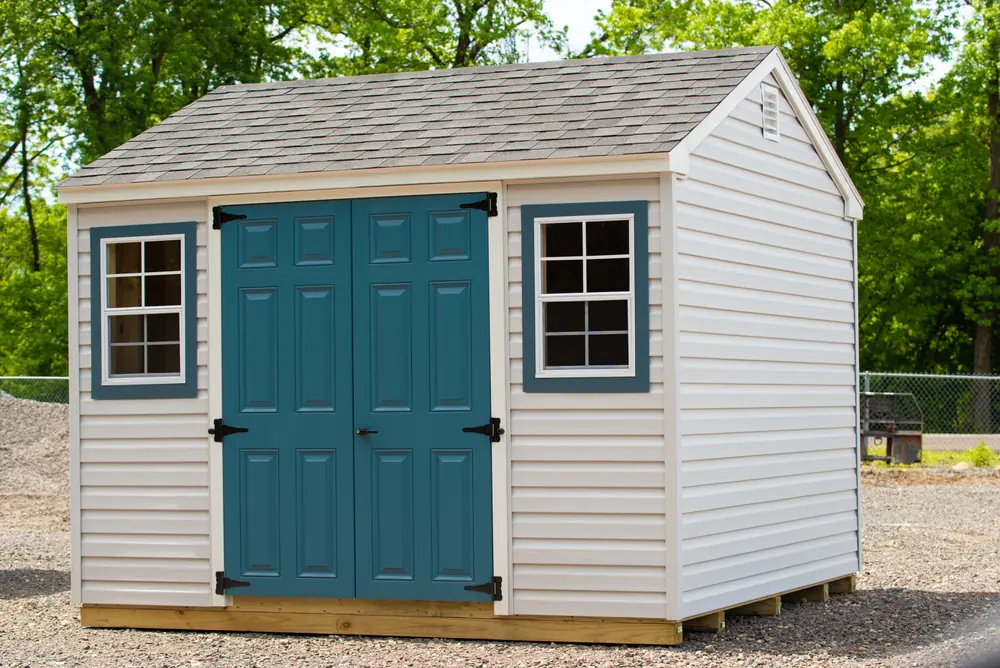
Cream storage shed with teal double doors and windows on a gravel display lot
Rent-to-own is the common route for storage buildings, and it does not require a credit check.

Rent-to-own

No credit check. You pay monthly, the building sits on your property the whole time, and you own it at the end of the term. The common route for storage buildings.

Ask about rent-to-own →

Financing

Financing programs are available for larger builds and custom sizes, with longer terms and a lower monthly. Every path gets explained plainly before you sign.

See financing options →
840 Hospitality Dr

How buying from the display works.

No salesperson walking up on you in the gravel. Pull in, get greeted, and head to the kiosk building.

Rows of storage sheds and lofted barns standing on a Shed Geek Structures display lot
What is on the ground is not the whole catalog. Factory-direct inventory is available beyond what you can see.
01

Pull in

Get greeted and head to the kiosk building. Any hour, no appointment.

02

Walk it on video

A Shed Geek connects on live video and walks the display with you, drawing on screen to show sizes, door placement, loft configurations, and options as you go.

03

Buy, finance, or go

Buy, set up financing, or just get your questions answered and go.

Frequently asked

Questions we get.

What size shed do I need?
Measure the largest thing going in it, add turning room, then go one size up. Mower with the bagger attached is the measurement people miss.
Do I need a permit?
Over 200 square feet in Spartanburg County, yes. Under, generally no, but setbacks still apply and HOA rules are separate.
Do you deliver to my part of the county?
We deliver across Spartanburg County and the surrounding Upstate. Bring your address and we will confirm access.
Does it need a concrete pad?
Usually not. Most storage buildings set on properly prepared and leveled ground with blocking or a gravel pad. Concrete is an option.
Is rent-to-own really no credit check?
Yes on rent-to-own. Standard financing has its own requirements.
Can I add a loft, windows, a ramp, or a heavier floor later?
Most of it is easier and cheaper to spec up front. Bring the plan to the conversation.

Come measure it out with us.

Bring your lot dimensions and your mower measurement to the Spartanburg display. A Shed Geek will size it with you on video.

  • DisplayShed Geek Structures, Spartanburg, SC
  • Address840 Hospitality Dr, Spartanburg, SC 29303
  • Phone(864) 727-7076
  • Emailinfo@shedgeek.com
  • HoursLot open 24/7 · live video consultation anytime
Shed Pro